
Fanstoshop
Overview
Struggling to keep up with fast-evolving social media landscapes amid constant algorithm and user behaviour changes? This guide is tailored for your brand.
Planning high-performing influencer marketing campaigns has never been easy, and keeping pace with shifting social trends only adds more challenges. To help brands run more effective influencer campaigns and capture greater market opportunities, we’ve sorted out 20 must-know social media trends shaping today’s digital marketing space. Below are three core game-changing trends worth prioritising right now.

1. Explosive Growth of Social Commerce
Major social platforms are continuously optimizing in-app shopping functions, enabling users to discover, browse and purchase products seamlessly without switching to third-party websites. Driven by immersive social content, the global social commerce sector has maintained steady year-over-year growth.
According to official data from Statista, the number of social shoppers in the United States has grown from 96 million in 2023 to 104 million in 2025. Meanwhile, the global social commerce market size is projected to exceed $1 trillion by 2028.
Social commerce has become a core revenue driver for brands, and influencers play an irreplaceable role in this ecosystem. Thanks to authentic and engaging creator content, social shopping experiences become more interactive and persuasive for audiences. Undoubtedly, social commerce is no longer a temporary trend, but a mainstream long-term online shopping channel.
2. Social Media Overtakes Google as the Top Product Discovery Channel
Booming social commerce has reshaped consumers’ product search habits. Especially for Gen Z audiences, social media has replaced Google as their primary tool for discovering new products. This massive behavioural shift unlocks huge brand exposure and customer acquisition opportunities for all marketers.
Most consumers refuse to buy unfamiliar brands without reliable trust endorsement. Here is where influencer marketing shines: creators have built solid trust and loyal follower bases over time. Partnering with targeted influencers helps brands break audience barriers quickly, build brand credibility and drive genuine purchases from cold traffic.
3. AI Becomes a Standard Tool to Streamline Influencer Campaigns
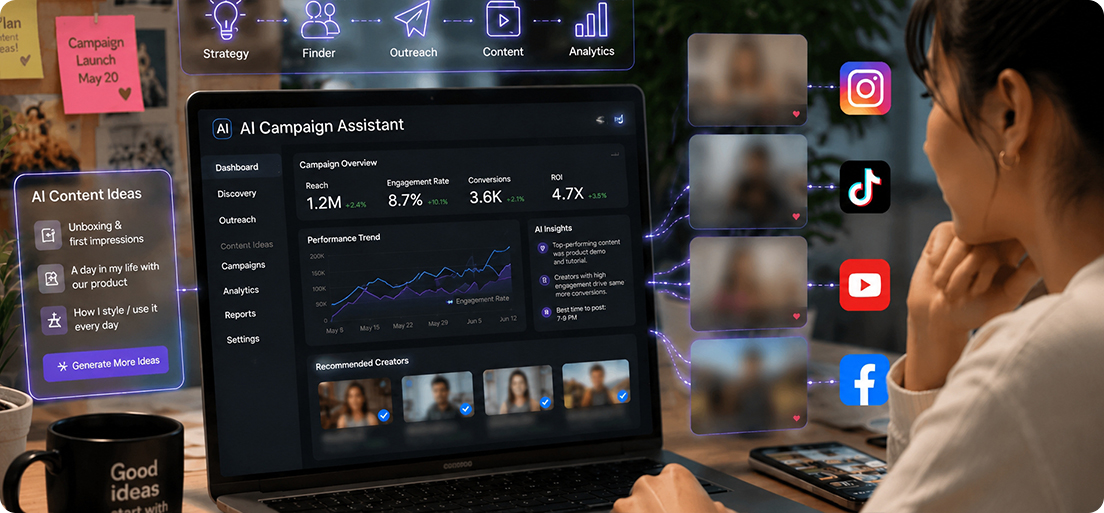
End-to-end influencer campaign management involves complicated workflows, covering strategy formulation, creator outreach, content monitoring and data analysis. Marketers also face mounting pressure to hit preset campaign KPIs efficiently. Against this backdrop, AI tools have become indispensable assistants for modern influencer marketing teams.
AI empowers every stage of influencer campaigns with flexible use cases: generating creative content ideas, optimizing overall campaign roadmaps, polishing social media posts, and conducting in-depth post-campaign data analysis. Brands can test different AI tools and customized prompts to cut redundant manual work, save operating costs and maximize overall campaign ROI with less effort.