
Fanstoshop
Overview
As the creator economy matures in 2026, influencer marketing has shifted from speculative brand sponsorship to a precision-driven performance channel. Brands no longer struggle to find creators; instead, marketing teams are overwhelmed by an endless stream of inbound applications across TikTok, Instagram, and YouTube. Manually reviewing candidate profiles in spreadsheets is not only an operational bottleneck, but it also increases the risk of partnering with inflated accounts, wasting campaign budgets, and delaying product launches. To scale creator recruitment efficiently and secure predictable returns, brands must replace subjective guesswork with a streamlined, criteria-driven vetting workflow.

Set Multi-Dimensional Vetting Benchmarks Beyond Vanity Metrics
The first step toward high-converting collaborations is looking beyond superficial follower counts. In today’s competitive social commerce landscape, high follower figures often disguise low engagement or bot-driven accounts. Brands must prioritize authentic engagement signals (meaningful comments, shares, and saves) and verify audience demographic alignment with their target market. Additionally, auditing past UGC content is essential to evaluate storytelling ability, video production quality, and natural product integration. Defining clear baseline qualification criteria upfront ensures that low-relevance creators are filtered out before consuming your team's bandwidth.
Automate Inbound Screening with a Creator Application System
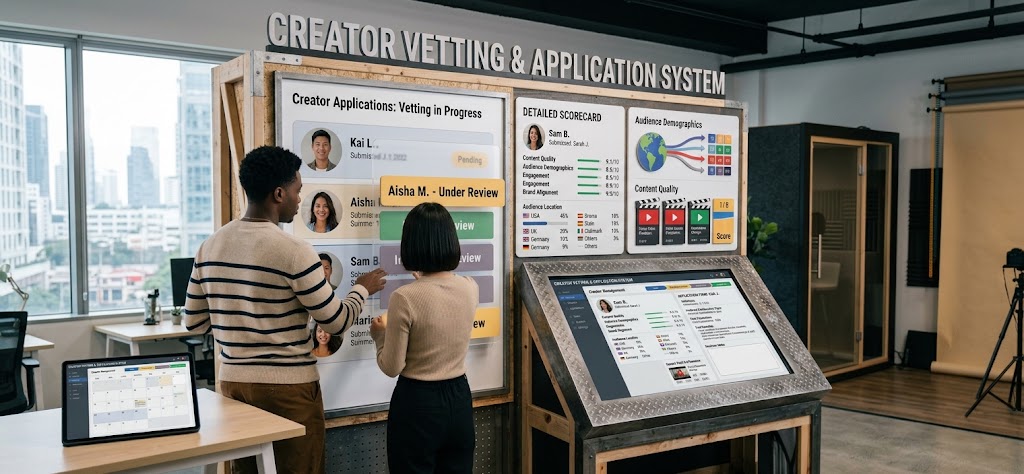
Relying on scattered DMs and unstructured email threads is the primary driver of campaign delays. To streamline the review cycle, brands should deploy a centralized creator application system that captures verified media kits, primary social handles, niche category tags, and preferred compensation models (flat-fee vs. performance-based) upon submission. By setting automated pre-screening rules within the application flow, the system instantly flags inactive profiles, low engagement rates, or mismatched geographic regions. This automated filtering reduces manual review turnaround times by over 70%, allowing your team to focus exclusively on pre-qualified, high-potential talent.
Implement Post-Campaign Reviews and Dynamic Creator Scoring
Vetting does not end when a partnership is approved—it must function as a continuous loop of performance tracking and relationship optimization. Establishing a structured influencer campaign review process allows you to monitor bottom-funnel metrics such as link click-through rates (CTR), conversion volume, and overall return on ad spend (ROAS). Pairing commercial results with operational factors, like brief adherence and communication responsiveness, provides an objective scorecard for every creator. This feedback loop enables brands to quickly phase out low-converting accounts while promoting top performers into long-term ambassador programs.
Conclusion
Building scalable creator partnerships in 2026 requires both operational speed and rigorous quality control. By establishing strict baseline criteria, centralizing submissions through a dedicated workflow, and continuously auditing campaign performance, brands can turn creator recruitment into an efficient, predictable growth engine. Streamlining your vetting workflow today ensures less time spent sorting spreadsheets and more time driving high-ROI collaborations with winning influencers.